Living Materials: Austyn Lewis and the Future of Biomaterial Fashion
Fashion is often associated with permanence. Garments are designed to last, trends move quickly, and production cycles rarely account for what happens to clothing once its life has ended. For Denver-based artist and designer Austyn Lewis, that mindset is worth challenging.
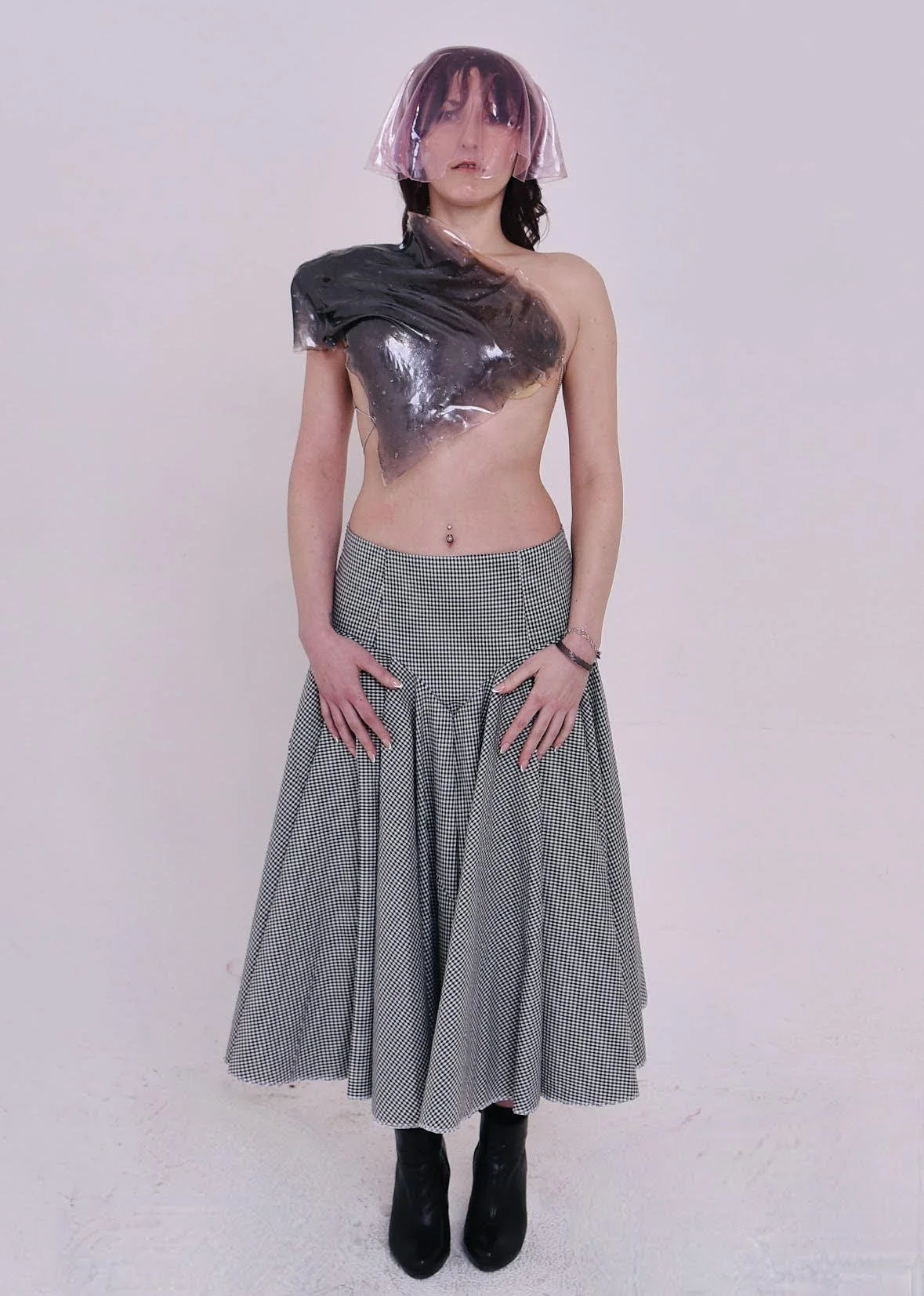
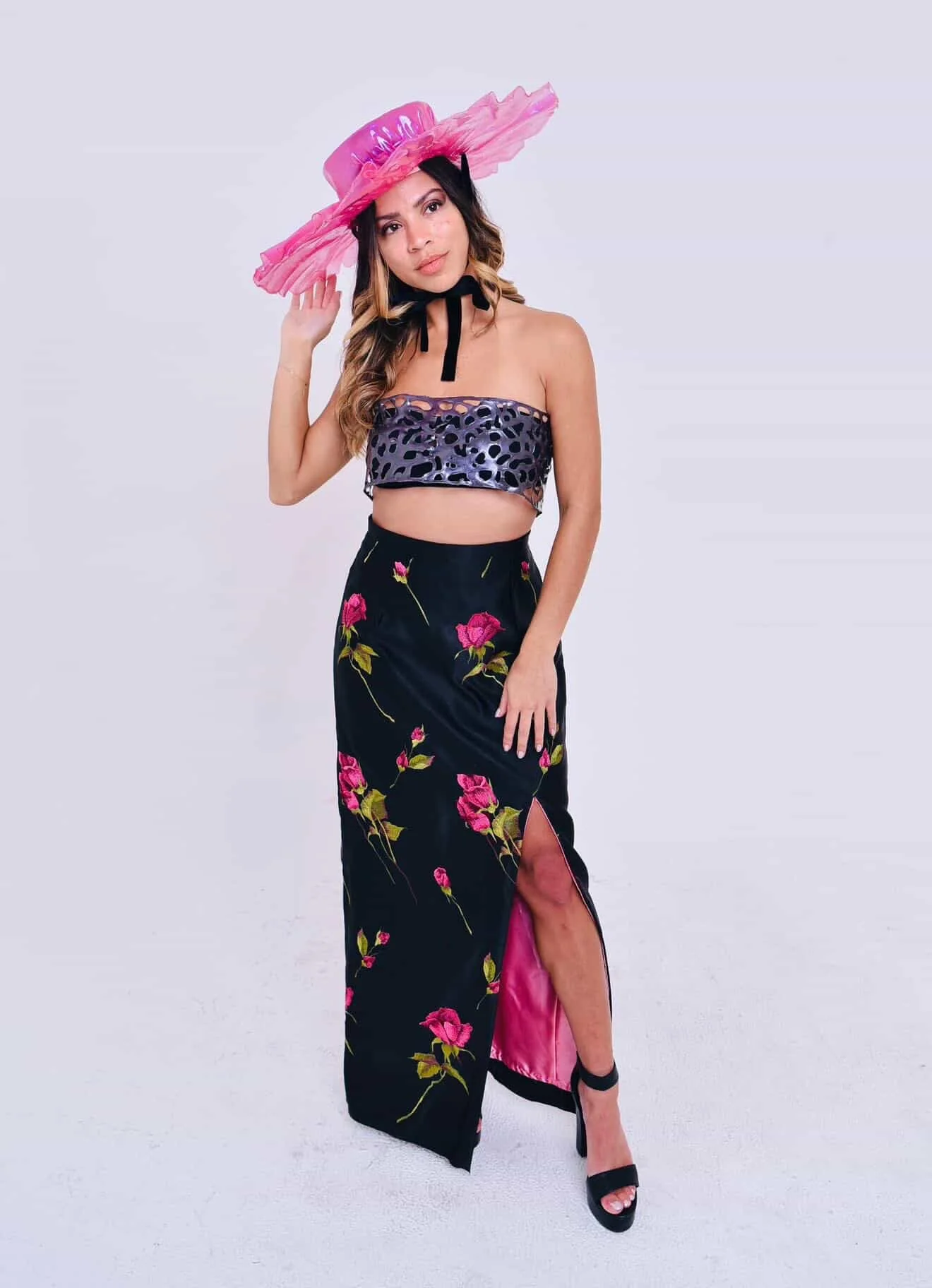
Through biomaterials, fiber art, textile experimentation, and sculptural design, Lewis explores what happens when fashion embraces transformation rather than permanence. Her work sits at the intersection of art, fashion, and material research, using unconventional materials to create wearable forms that invite new conversations about sustainability, creativity, and our relationship with the objects we wear.
At the center of her practice is a simple but powerful idea: materials, like people and ecosystems, are constantly changing. Rather than resisting that reality, Lewis works with it.
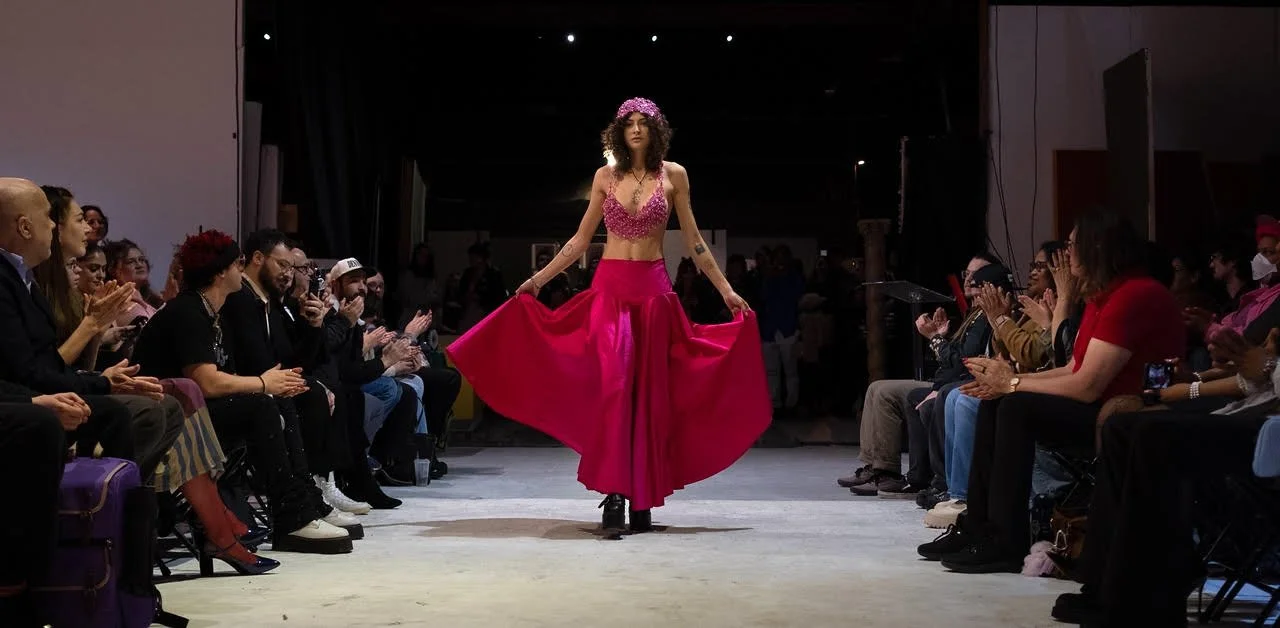
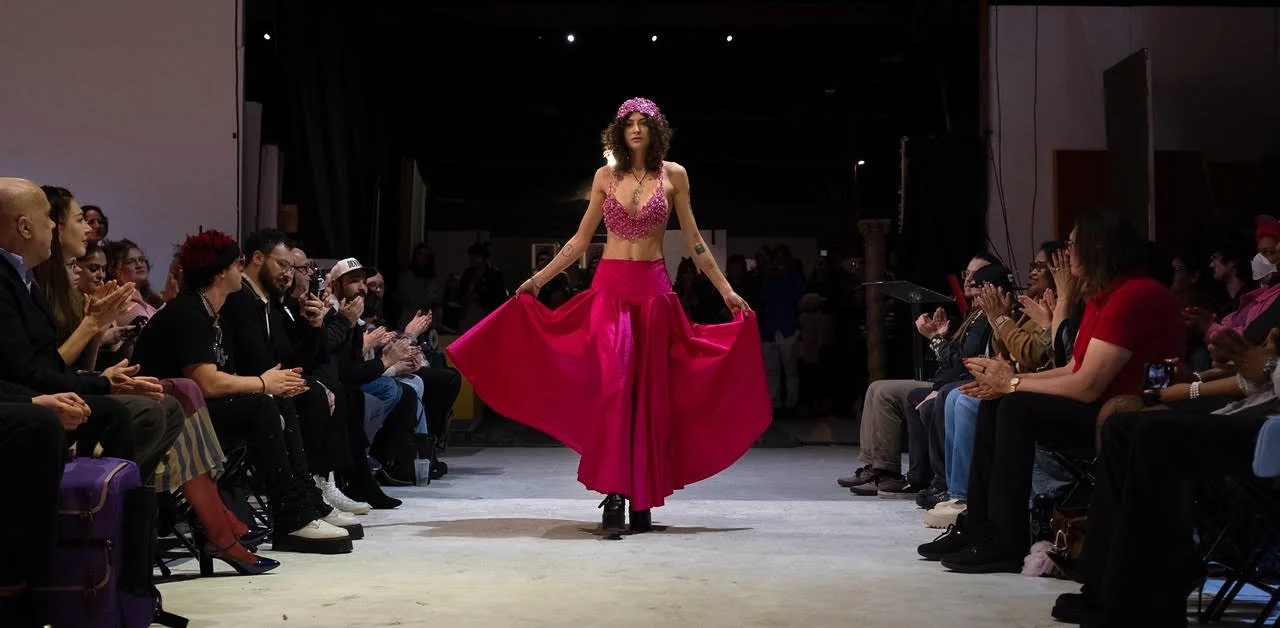
OFFSEAM Heartbreakers 2026 runway- bioplastic tops, thrifted/upcycled skirts
Questioning Permanence
Lewis earned her BFA in fashion design from Rocky Mountain College of Art + Design, where she developed a strong technical foundation in garment construction. But it was during the COVID pandemic that her creative direction began to shift.
While conducting an independent study focused on biomaterials, she began experimenting from her own kitchen. As she worked, she watched the materials she created naturally break down, change, and transform over time. The experience led her to question one of fashion's most deeply rooted assumptions.
"Why are we designing garments to last forever, instead of embracing natural lifecycles?"
That question became a turning point. What began as a material experiment evolved into a broader exploration of decay, transformation, and the role clothing plays within larger environmental systems.
Sustainability as a Creative Challenge
For Lewis, sustainability is not simply a responsibility — it is an opportunity for innovation.
Many conversations around sustainable fashion focus on reducing harm, but Lewis approaches the topic from a different angle. She sees sustainability as a creative challenge, one that invites designers to rethink materials, processes, and possibilities.
"I look at sustainability within fashion as a creative problem to solve."
That perspective has shaped her work with biomaterials and reinforced her belief that artists and designers have an important role to play in developing new approaches for a changing world.
"Sustainability is needed, and every designer should be looking into their own impact and footprint. Creative fields are the ones that should be innovating sustainability."
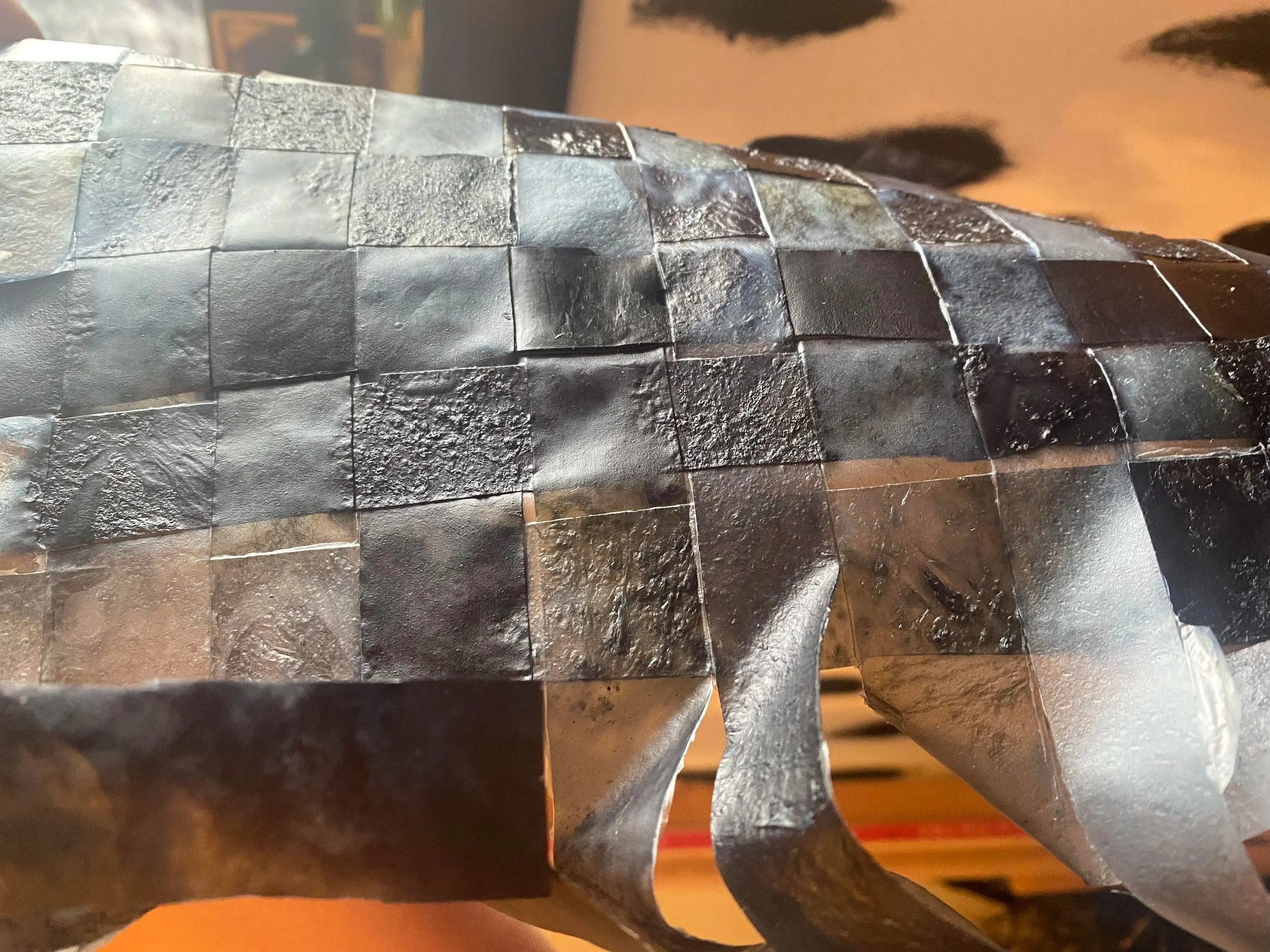
Woven alginate leather experimentation.
Designing With Living Materials
Unlike traditional fabrics, biomaterials often refuse predictability. They respond to humidity, temperature, handling, and time itself.
Over the years, Lewis has experimented with materials derived from starches, algae, gelatin, agar, and other organic sources. Developing recipes that are durable enough for fashion applications while still retaining their biodegradable qualities requires extensive testing and refinement.
Her process combines material science, experimentation, and traditional fashion techniques, creating work that exists between disciplines.
The challenges are significant. Some materials shrink in dry climates. Others may mold in humid environments. Waterproofing remains an ongoing area of exploration, and producing biomaterials at scale presents additional difficulties.
Yet those challenges are also what make the work compelling. The materials demand patience, observation, and adaptability.
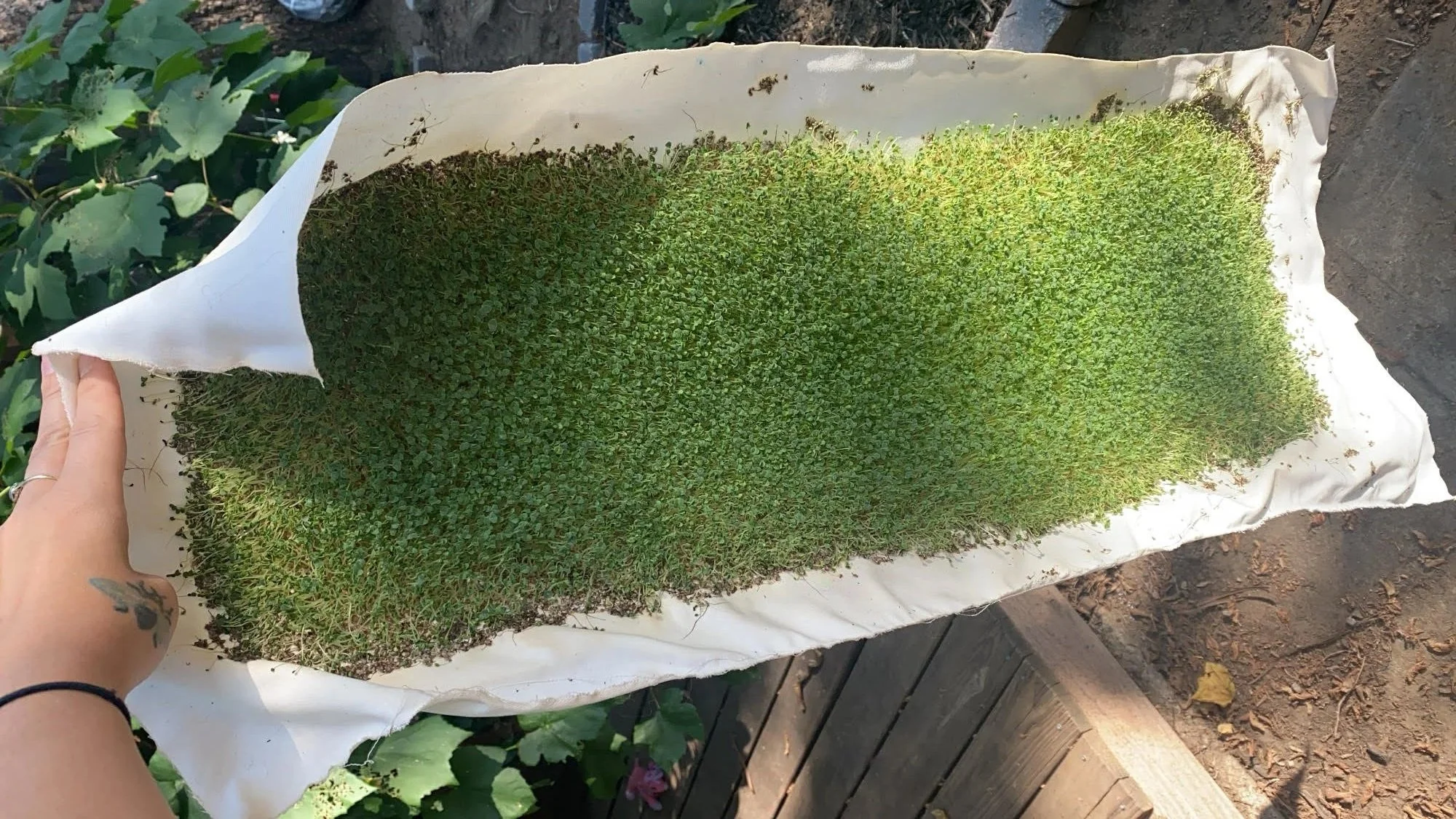
Chia seed grown on organic cotton experiments
Making Space for Failure
Working with experimental materials means accepting uncertainty. Not every test succeeds, and not every outcome can be controlled.
For Lewis, that unpredictability has become an essential part of the creative process.
"My work comes from a place of curiosity rather than control and lives in experimentation—where failure is part of learning, and nothing is fixed."
In a culture that often prioritizes polished results, her approach offers a different perspective—one that values discovery as much as completion.
"Working with biomaterials means operating in undefined territory, so I’ve learned to value growth over perfection."
An Invitation to Experiment
Beyond creating garments and sculptural works, Lewis hopes her practice encourages others to explore the possibilities hidden within everyday materials.
Her advice to artists and designers is not to wait for perfect conditions or perfect outcomes. Instead, she encourages experimentation, curiosity, and a willingness to learn from the natural world.
"If I were to give any advice, it would be to play, to try out the experiment, to make your own dye out of vegetables, or keep your orange peels and see what it can turn into, see what life is still within the average item that is looked at as trash."
That mindset — one rooted in observation rather than perfection — sits at the heart of her work.
"If your experiment doesn't succeed, try again on a sunny day, try again on a rainy day, understand that the living world around you affects the outcome of your practice, and that is okay."
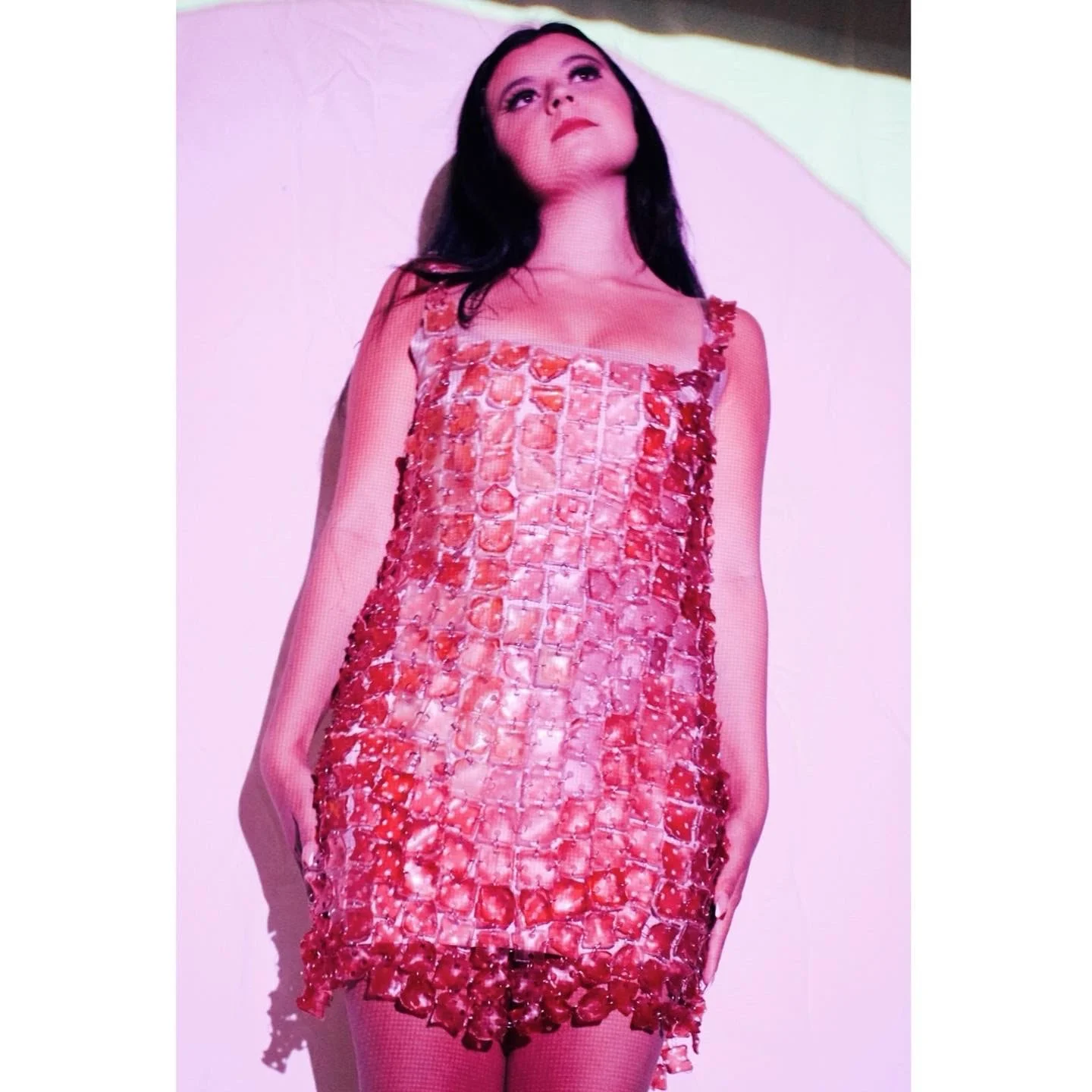
Bioplastic dress dyed with beets.
Looking Forward
As Lewis continues to develop new biomaterial garments and participate in fashion shows throughout Denver, she remains focused on exploration rather than certainty. Her work asks viewers to reconsider ideas of beauty, permanence, and waste while imagining a more cyclical relationship between fashion and the environment.
"Ultimately, I want to contribute to a shift toward curiosity, responsibility, and a more cyclical way of thinking about fashion."
In a field often driven by speed and consumption, her practice offers a different path—one where experimentation, sustainability, and transformation are not separate goals, but part of the same creative process.
Follow Austyn Lewis
Lewis has recently been showcasing her work through fashion shows and continues to expand her biomaterial practice. Her latest projects and upcoming portfolio can be found through her social media channels and future online portfolio.
Get Involved: Inspired by Austyn’s journey? You can make a difference too. Share your own sustainable artwork by submitting your art or join our ambassador program to connect with other artists and conservation initiatives. Every creative action helps support parks, wildlife, and a more sustainable world.
