Listening to Land: A Conversation with Fawn Brown
Co-Lead, Indigenous-Led Artist Series | Cherokee Nation Artist on Art, Conservation, and Storytelling
Introduction
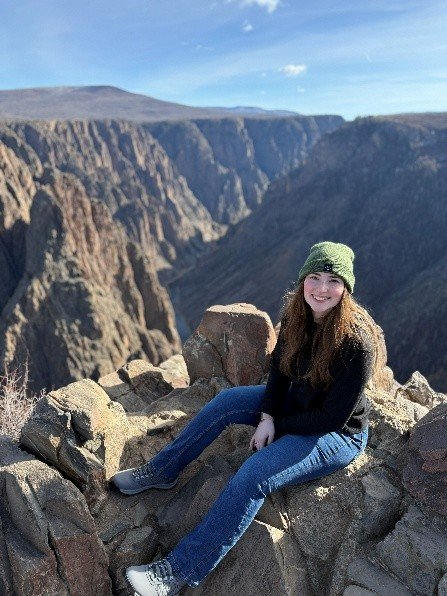
This conversation features Fawn Brown (ᏣᎳᎩ/ Cherokee Nation), artist and Community & Indigenous Partnerships Advisor for Art For Our Parks. Her work, perspective, and guidance have shaped the direction of this series from the beginning, particularly in how it approaches Indigenous perspectives, storytelling, and relationships to land and conservation.
This feature is included not only as an introduction to her creative practice but as part of the foundation of this series itself. It reflects both her artistic journey and her role in helping shape how these conversations are held.
About Fawn Brown
My name is Fawn Brown, I’m a ᏣᎳᎩ (tsa-la-gi pronounced jaw-law-gee) artist enrolled with the Cherokee Nation. I started pursuing art professionally when I was 21. I didn’t plan on getting into the arts, I’d say I stumbled into it.
I studied Psychology in college, and I was taking a gap year before I decided on grad school when I applied to my first gallery. When I was accepted, I was shocked. And when I made my first few sales, I was shocked again.
I’m currently in my 4th year as a resident artist with RTown Gallery, and I now work as the gallery manager and a rotating exhibition juror. Since I started in the arts, I’ve also gained representation by WYLD Gallery, become a volunteer curator for Cut+Paste Magazine, and done work for CCNT’s Cultural Arts Collective.
In recent years I’ve been finding a new purpose in my art. Previously I considered myself a landscape painter, and that was that. But I’ve been slowly expanding my practice to include all things related to nature, ecology, and conservation as well as some Tsalagi woodland folklore. Most of my work is made with watercolor and gouache, but I’m also very interested in process based arts. For myself this means getting involved with the full production of my materials, from making the paper I paint on to the paint I create with.
Land, Identity & Relationship to Please
Q: How does your identity as a citizen of the Cherokee Nation influence your work, if at all in ways you’d like to share?
In the past few years I’ve tried to become more familiar with our cultural stories, many of which deal directly with animals. Painting those animals in reference to our stories has helped me feel more connected to them, and also allows me to share our tales in a way others can enjoy.
Q: How do you personally define your relationship to land?
I’ve seen more than a few people in the conservation world say that humans are invasive or parasitic to ecosystems, but I disagree. I believe humanity is an essential part of our environment. If we write off human beings as being invasive or parasitic, it gives people an excuse not to care, because being bad for nature is just “how we’re made”.
How I spend my time on the land I occupy is just as important as any other being living there. I try my best to be in balance with the world around me.
Q: Are there teachings, values, or perspectives that guide how you approach land stewardship or community work?
Of course! We have this concept called ᎦᏚᎩ (gadugi said gaw-doo-gee), which is the idea of working together, and personal responsibility to your community. In Cherokee spaces, if you are to take part in something you are also expected to help out. When I’m on a hike and see trash, I pick it up; if I see an invasive plant, I pull it. And if there’s a shopping cart left out, I put it away. It doesn’t take a lot to help others, half the battle is just showing up when needed.
“We also have this concept called ᎦᏚᎩ (gadugi)… half the battle is just showing up when needed.”
Work, Community & Conservation
Q: What does your role as Community & Indigenous Partnerships Advisor mean to you? What kinds of impact do you hope to create through this work?
I view my role as a bit of a cultural translator. Oftentimes, communication between native and non-native communities can get skewed because of the lack of education on indigenous culture and history.
Not everyone knows the protocol for identifying yourself, or the vocabulary used in tribal nations.
I’m hoping that the work I do with Art For Our Parks can provide insight for non-native communities on the fact that we are still present and actively involved with the modern age. I also hope that I’m able to uplift other native artists and provide opportunities for them to tell their own stories, and be recognized for their work.
Art, Storytelling & Representation
Q: How do you see art and storytelling contributing to Indigenous visibility and advocacy?
I’ve seen an increase in the amount of native artists in the industry, both practicing traditional arts and modern ones. These days you don’t have to go to Santa Fe to see native art, you can find it all over the world.
Art brings people together; it allows different stories to be heard, and I think that’s really important. Sometimes, the only way to get a point across is to draw it out for people.
Q: In your view, what makes representation respectful and meaningful rather than extractive?
It has a lot to do with what’s happening on the back end of things. Just saying “land back!” means nothing if you can’t even name what tribe you’re saying to give the land to. True representation only comes from sources who have boots on the ground or stay informed on what’s happening in NDN country.
Guidance For Artists & Organizations
“Do your research! I cannot stress this enough!”
Q: What advice would you give to artists who want to engage with Indigenous themes or land-based work in a respectful way?
Do your research! I cannot stress this enough! Time and time again I see artists drawing native people and cultures with no foundation other than stereotypes. They think all native people wear turquoise, live in teepees, and use a bow and arrow to hunt. They don’t understand that turquoise is culturally significant in the southwest, that teepees were for nomadic plains tribes, or that most coastal communities didn’t hunt buffalo.
If you want to create art with indigenous themes, make sure you are doing your best to represent them accurately. There’s more information out there than ever before to help you get it right. And if you can’t find the answer, just ask. While there are some things that are kept private, most communities are open to providing information if it means they aren’t being misrepresented.
Q: How can non-Indigenous artists and organizations better support Indigenous communities and voices?
A very prevalent problem I’ve seen is people operating under the guise of being native when they truly have no connection to indigenous tribes. I want to be clear, I do not mean people of native descent who can’t enroll because of blood quantum, or people who are a part of state-recognized tribes pursuing federal recognition. I mean people who decide that being native will give them a leg-up in the arts or academic world.
Most people don’t know, but it’s a federal crime to advertise your work as being native American made, when you are not a tribal citizen (Indian Arts and Crafts Act of 1990). The problem is that those people only get caught if they are reported. So if you know someone is fraudulently selling ‘native’ art, report it.
As for organizations, I’d encourage members to look into what tribes they have nearby and what their reservations are like. About 25% of the native population is living in poverty, with some communities being as high as 68% (https://ncrc.org/racial-wealth-snapshot-native-americans/). Art can come from anywhere, but it’s hard to pursue when you barely have enough money to eat. There are several organizations that I’ve seen who offer grants, scholarships or fellowships to native communities to help impoverished artists stay afloat.
Personal Reflection
Q: Are there artists, leaders, or community members who have influenced your path?
I have my friend and mentor Rachel Cerny, who’s belief in me back in 2023 was one of the most pivotal things in my art career. Without her I’m not sure I’d be where I am today.
For my tribal at-large group there’s Teri Hall and Mellanie Cain. Mellanie helped me get my first artist residency that I’ll be doing later this summer, and Teri invited me to assist with the Cherokee Community of North Texas’ Cultural Arts Collective. Both of which have provided me the opportunity to connect with other native artists inside and outside of my community.
Closing Reflection
Honestly, I’m just excited to be here and do this work. I can’t wait to see where this series goes and who it can positively impact!
This conversation is part of the Indigenous-Led Artist Series, which centers Indigenous voices, storytelling, and relationships to land and conservation through art and dialogue.
