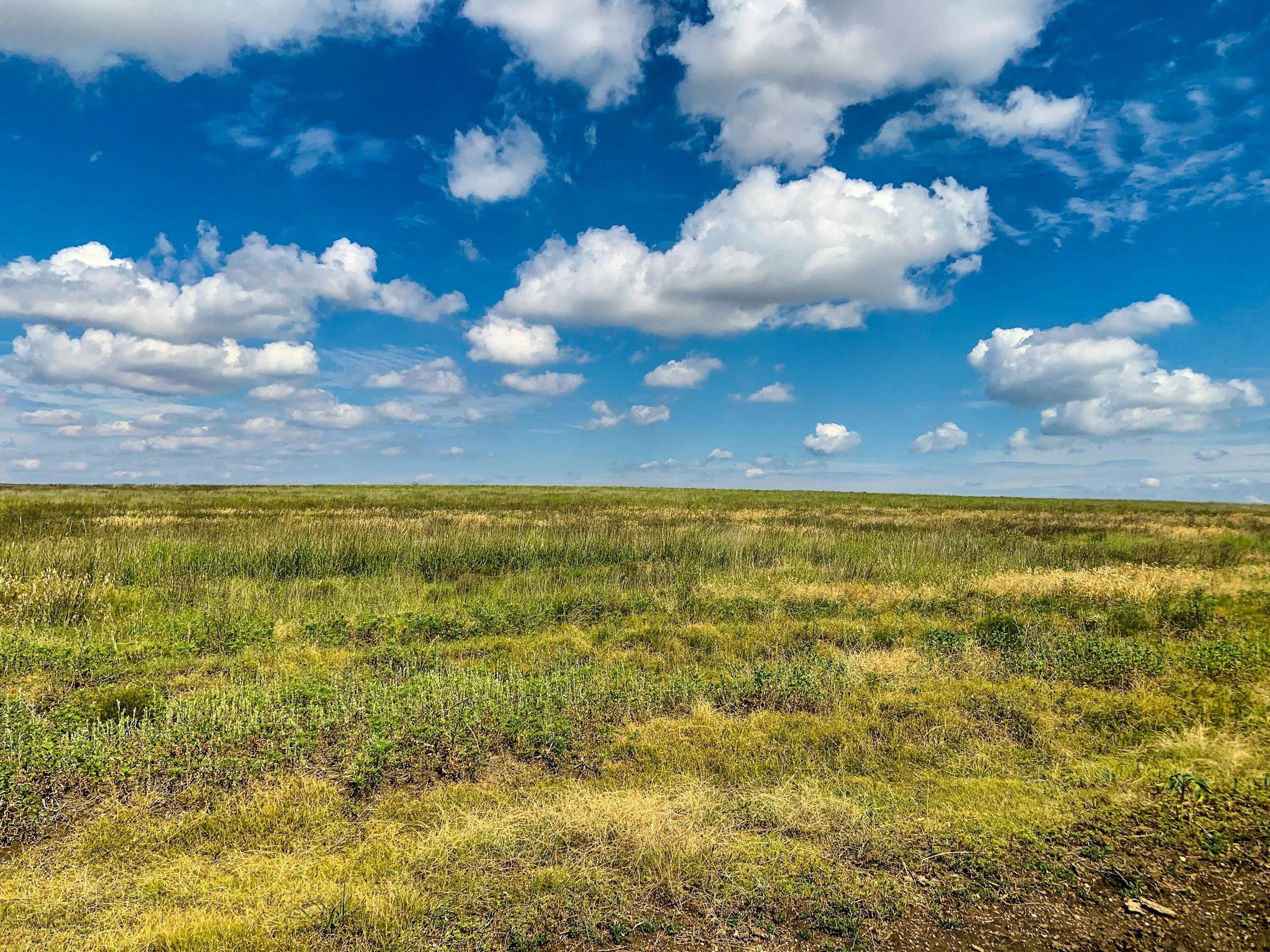
Black-footed Ferret Conservation: Saving the Endangered “Prairie Bandit”
Art for Our Parks: Stories of the Land
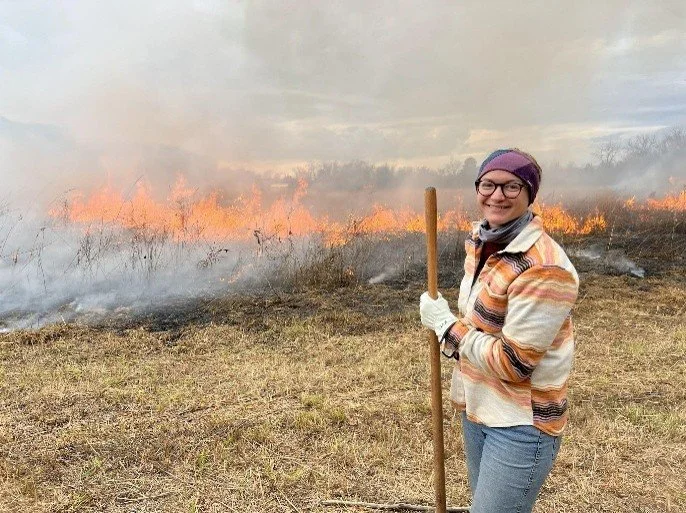
Nicole Mittman, Wildlife Field Technician and Amateur Artist
Prairie Wildlife Research, South Dakota

Prairie Wildlife Research | Support Grasslands Species Today! | Bonfire
Black-footed ferret and other prairie merch! All designed by Nicole; portion of proceeds goes directly to the 501(c) nonprofit Prairie Wildlife Research!
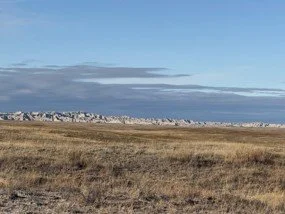
BUFFALO GAP NAT’L GRASSLAND AND BADLANDS NAT’L PARK, SD — In a select few locations across the Great Plains, one of the most charismatic little fellows you could possibly imagine still makes its living the way it has for thousands of years: eating prairie dogs by the light of the prairie moon.
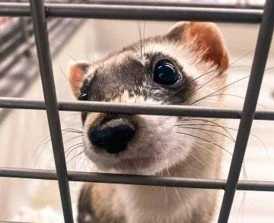
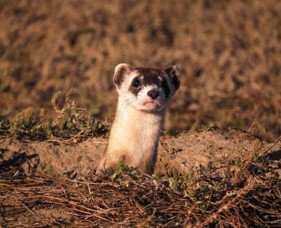
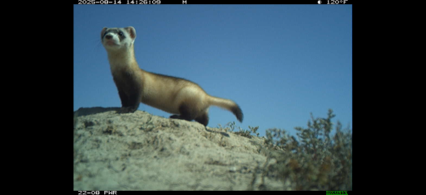
Black-footed ferrets, native to North America and a separate species from the domestic pet ferret, are the most specialized predator of the conspicuous and contentious prairie dog. Over a century of poisoning campaigns against the rodent, combined with the arrival of plague (yup, that plague!), have decimated the prairie dog population. Some estimates say today’s numbers are a mere 2-5% of what once was. The black-footed ferret saw a subsequent decline that was so dramatic that they have not once, but twice, been feared extinct. Luckily, they were famously rediscovered in the 80s by a ranch dog who killed one during a midnight scuffle, which led biologists to a small remnant population holding on in Meeteetse, WY. Shep was both a killer and the savior of black-footed ferrets; the remnant population was struck by disease soon after and the last 18 in the world were trapped and formed the nucleus of a successful captive breeding program, which supplied reintroduction efforts later down the road.
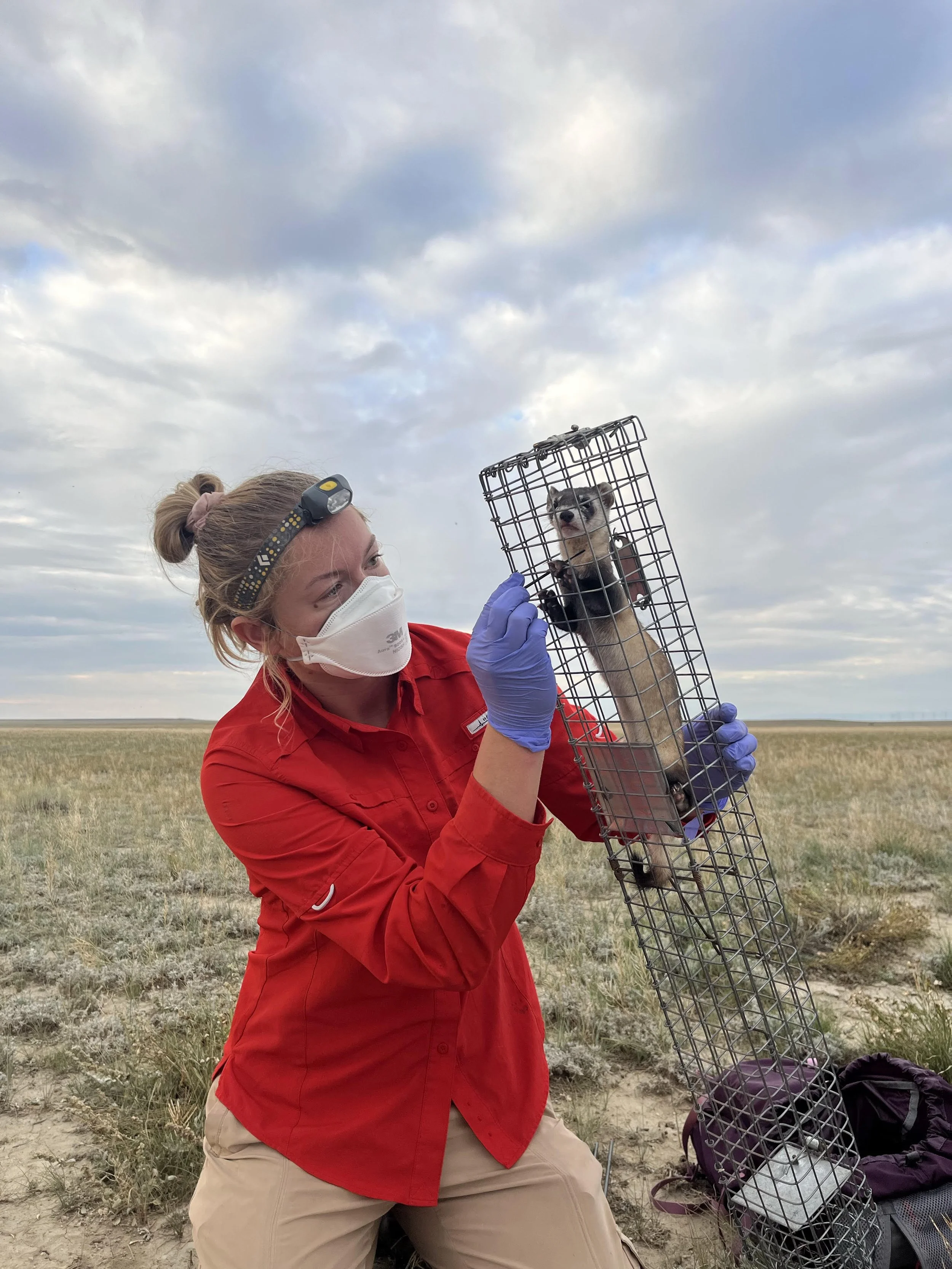
In the mustelid family, which includes other noodle-shaped critters like otters and pine martens, black-footed ferrets are rarely seen. The reason for this is three-fold: they’re strictly nocturnal, highly fossorial (underground-dwelling), and relatively sparse even where they have been reintroduced, which isn’t all that many places in the first place! But one of those places is in Badlands National Park and the neighboring Buffalo Gap National Grassland, where I work as a field technician monitoring the ferrets and their prairie dog prey. Plague and drought are the biggest threats to this population, which have certain protections as they exist on federal lands specially dedicated to their recovery, but they still stir up their share of controversy amongst locals. After all, why should their leased grazing lands be regulated by the Endangered Species Act for a species that no one sees anyway?
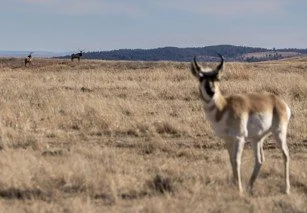
It’s not an entirely unfair question. While the Endangered Species Act is one of the more powerful pieces of conservation legislation, it has quite a few faults- one of which is that single species conservation is an inefficient way of protecting said species. After all, we wouldn’t have had to start up an emergency captive breeding program for black-footed ferrets if there had been better protections in place for the grasslands ecosystem and specifically, the prairie dog ecotone, which supports far more than just black-footed ferrets. A few examples of other species that are associated with prairie dogs: burrowing owls, mountain plovers, ferruginous hawks, rattlesnakes, badgers, swift fox, golden eagles, long-billed curlews, tiger salamanders, horned lizards. Ungulates like pronghorn, bison, and even cattle have shown preferential grazing during certain times of the year on the different vegetation makeup of prairie dog town. Therefore, by protecting prairie dog habitat on public lands, many species benefit. But, paradoxically, the same federal government that funds endangered species conservation also funds prairie dog poisoning as part of a good neighbor policy to prevent escalation of anti-prairie dog and anti-ferret sentiment. Changing these sentiments requires a paradigm shift that can only be achieved with perhaps economic incentive or education from a trusted conservation partner, something that takes years to build the proper foundation and relationships to have a chance of success.
It’s one of the things I’m most interested in, though, because I come from an agricultural background myself: I was raised a corn-fed Nebraskan and daughter of a hard-working crop consultant. In fact, for an animal lover like me, grassfed cattle production landscapes are a biodiverse breath of fresh air compared to the monoculture crop systems that I grew up around, which provide corn to feedlot cattle. And one thing I know for sure- most of the folks working within these prairie landscapes love their home more deeply than anyone, even if the value of black-footed ferrets is lost on some. But I believe that any part of this incredible, underappreciated biome is not only worthy of a continued place on the landscape, but an inextricable piece of the puzzle. I know that there is great opportunity in the context of prairie dogs and ferrets for educational outreach, wildlife ecotourism, and partnerships between environmentalists and the agricultural communities that steward much of the last remaining grassland on earth; I hope I can find that common ground in a way that gives locals a reason to take pride in endangered species instead of fearing them and benefits both people and black-footed ferrets for generations to come.
Q/A:
1. What inspired you to pursue a career in wildlife biology, particularly working with black-footed ferrets?
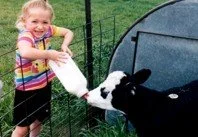
I grew up on a farm in eastern Nebraska, where I was lucky enough to be surrounded by animals from a young age. My love for cats and dogs made me think I wanted to be a vet — until I shadowed a vet in high school and realized I didn’t want to perform neutering surgeries under fluorescent lights (I almost fainted watching it happen!). A family trip to Yellowstone and watching lots of Animal Planet as a kid is what solidified my decision to pursue wildlife biology instead. I just loved being outdoors.
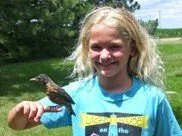
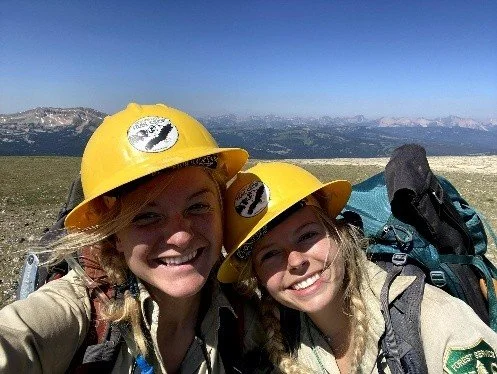
Black-footed ferrets were barely on my radar until I got to college and learned about their conservation in class. Like many people, I was immediately hooked because of the adorable face and unlikely comeback story. So when I graduated and was offered a job at Wind Cave National Park as a seasonal wildlife technician, I simply couldn’t pass up the opportunity to work with the marvelous little critters. I became even more hooked after having my first ferret in hand and have been pursuing related jobs ever since.
2. Can you describe your educational journey and how it prepared you for this field?
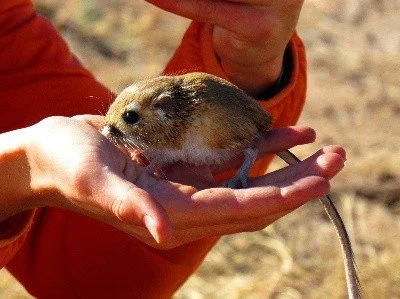
I have a bachelor’s degree in wildlife biology from the University of Nebraska at Kearney. One of the most important parts of my college education was a robust undergraduate research program, so not only did I have lessons in a traditional classroom setting, but I also got to participate in fieldwork. This included things like trapping kangaroo rats, counting sandhill cranes, and scrolling through what felt like a million motion-triggered camera trap photos of different species utilizing a muskrat house!
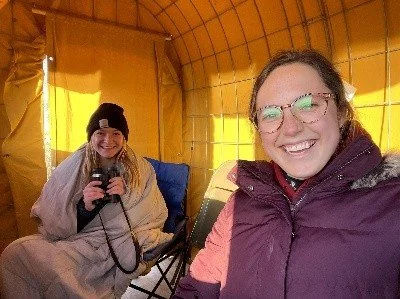
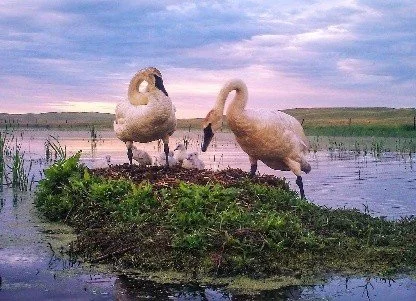
At 26, I am still relatively new to the wildlife field and have much to learn from my colleagues and mentors. I do hope to attend graduate school sometime soon to expand upon my research skills and hopefully improve the ways that we can conserve black-footed ferrets.
3. What is a memorable experience from your work with black-footed ferrets?
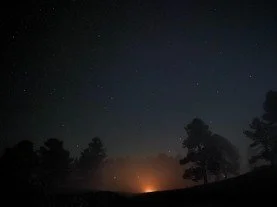
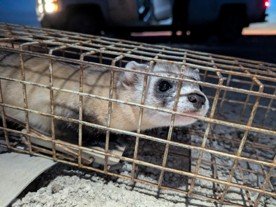
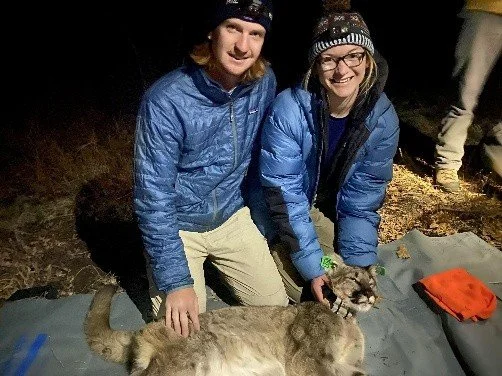
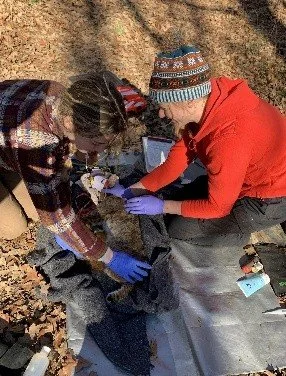
One of my all-time favorite memories is of the night I successfully trapped my first black-footed ferret. Annual spotlight surveys are a big part of their management, which consists of locating their eyeshine at night (they are extremely nocturnal), placing a trap over the prairie dog burrow that they dive into with the goal of capture so we can give them an ID and shots to protect them from deadly diseases like plague. So, I had placed a trap on a ferret in Wind Cave National Park and was waiting on a nearby hill, sitting in a patch of little bluestem on a quiet night in the prairie. The stars were bright and clear, the milky way stretched across the sky like a veil, and the silhouettes of dozens of stately ponderosa pines cradled the small prairie dog colony I was sitting in. The who, who of a great horned owl sang out from the branches and made me keep my guard up as I shone the spotlight into the prairie dog colony via my vantage point on the hill, looking for additional ferrets and hoping I’d find them before the owl did. A handful of late-night elk bugles drifted along the autumn breeze. The call and response of coyotes, more distant, made me wonder if the voices were friendly greetings or territorial warnings. Tiny gnats, mosquitos and other prairie snacks were drawn to my spotlight, which in turn brought in hungry bats which swooped and danced in the light a little more gracefully than the insects. A flash of yellow-green eyeshine made my heart race — another ferret! But alas, it was just a badger, trotting across the town in a straight line with what sure looked like a very important purpose. I followed its movements with my spotlight and couldn’t help but smile. As long as it was heading away from my set ferret trap!
I remember watching the incredible scene playing out in front of me and thinking, how lucky am I to be a witness to this? That was finally the moment that prairie conservation fully clicked for me. Even though I had grown up in a Great Plains state, I only associated the plains with corn and soy and always thought the mountains were my Mecca. But the prairie magic in South Dakota that night was a wakeup call for me- what’s left of our native grasslands are some of the most biodiverse, yet underprotected and underappreciated, landscapes in America. Ever since then, I’ve been contemplating how many other things we must miss when we aren’t specifically looking for it — not that I’m advocating for everyone to embark on caffeine-powered, 2am shenanigans in the middle of nowhere! And in case you’re wondering: yes, I did literally jump for joy when I heard the trap snap shut and was finally eye-to-eye with a wild black-footed ferret.
4. What challenges do you face in your work, and how do you overcome them?
I wish more people even knew about black-footed ferrets. It’s really common to talk to locals who live near these incredibly rare and special critters who have no idea they exist. To be fair, ferrets don’t exactly make their presence well-known; they’re strictly nocturnal, mostly live underground in prairie dog burrows, and are elusive even in designated recovery sites. But once people understand that they aren’t the same as domestic pets, that they’re a North American native and part of the heritage of the Great Plains, they can become quite fascinated with them. It definitely helps that the ferrets are so cute!
Sometimes, though, people reverse course when they learn that ferrets are inextricably associated with their prairie dog prey, which are typically viewed as a pest species that must be controlled, not something to be encouraged for the sake of an endangered species that is rarely seen anyway. This is especially true in ranching communities, who of course have more direct experience with prairie dogs than the city-slickers who tend to be more sympathetic to the ferret plight. Social intolerance of prairie dogs is one of the longest-standing challenges of black-footed ferret conservation; after all, ferrets are rare today largely because of centuries of poisoning efforts which reduced historic prairie dog populations by up to 95%. Real and perceived competition with cattle for forage is what still drives prairie dog disdain today. However, the ranches that are responsible for poisoning prairie dogs are the same ranches that hold much of the last remaining intact native grasslands in North America and are run by folks that love the prairie in a way that is deeper than most anyone else. Grass-fed livestock production keeps these habitats from getting developed and in most ways, ranchers and conservationists want the same things for this ecoregion. And a lot of successful conservation partnerships do exist on working lands. But unfortunately prairie dogs remain contentious enough that there is still significant disconnect between most landowners and wildlife advocates when it comes to this matter.
This is not an issue that is easily solved. But, something that helps me to bridge the gap between agricultural and environmental interests is the fact that I am the proud daughter of a hard-working Nebraska crop consultant. I grew up surrounded by cornfields and know that scolding rural families trying to make a living is not effective. That said, it’s okay to challenge the status quo in a constructive way. For example, I might concede that prairie dogs and cattle can certainly compete for grass, especially in drought years, but point to the increase in plant diversity and digestibility on prairie dog towns- as well as higher forb availability, which are higher in crude protein and often offset the loss of grass. I might find common ground by bringing up juniper encroachment, a threat to native grasslands that prairie dogs can help regulate by clipping woody plants. Maybe I’ll point to the fenceline along the highway and note that only the side heavily grazed by cattle has prairie dog town, and if prairie dogs liked eating tall green grass so much, why haven’t they touched the ditch? Prairie dogs are often the symptom of overgrazing, not the cause of it.
Ranchers are practical people, so even if they’re not against the existence of black-footed ferrets, they’re more likely to make decisions based on economics, not ecology. Therefore, instead of leading with the argument that prairie dogs are keystone species that support many other grassland animals, it can be more productive to talk about research that suggests the price of poisoning prairie dogs is often higher than the value of forage gained. It’s a slow process to change minds, and not always successful. Just starting the conversation is often the hardest part because I am a conflict-averse person. But without dialogue, we get nowhere and nothing changes. I believe there is much more potential for black-footed ferret conservation on private lands but that it will take a lot of time investment and educational outreach in local communities to build the foundation of trust needed for successful partnerships.
5. What gives you hope for the future?
Forty-five years ago, biologists feared the black-footed ferret was extinct. They didn’t know of a single existing population that survived in North America! But with the discovery of a remnant population in Wyoming in 1981, thanks to Shep the ranch dog, they were given a second chance. Sometimes their outlook today is discouraging, and to be sure, they are far from an ecologically-recovered species. Plague and social factors threaten their conservation. But, because of the monumental efforts of many people — some of whom have dedicated their entire lives to conserving the black-footed ferret — they are no longer on the brink of extinction. The fact that there are free-ranging ferrets right now, across multiple Great Plains states, that are sleeping the day away in abandoned prairie dog burrows until their midnight appearance at the surface, is a testament to what can be achieved when you don’t give up on a species. You and I share an earth with black-footed ferrets today because of people in the past who held hope for the future. It would be a disservice to both their efforts and to the mighty little ferret to give up that hope now.
6. Who has been your biggest inspiration in the field of conservation?
I feel that it would be unfair to pick any one person as an inspiration because in reality, I am inspired almost every day by the people I’ve met and worked with in the wildlife field. Which sounds pretty corny, but it’s true. In fact my life has been shaped by people in this field! I met my wonderful fiance, Logan, in college because we both majored in wildlife biology. We shared a passionate research advisor who taught us how to scruff kangaroo rats without getting nipped and how to screech to a stop to pull unassuming snakes out of the road (to both save them from getting smooshed and to pass it around for photos!). I’ve met people who wax optimism and a can-do attitude no matter what obstacles are thrown their way. I’ve been blessed with excellent bosses and mentors at every turn and continue to learn more every day from their hard-earned wisdom and freely-shared advice. And I have laughed and cried with seasonal co-workers who I spent just a few months with — and are now lifelong friends who have traveled hundreds of miles to hang out again.
Maybe most importantly, I’ve been inspired by the humor, dedication, selflessness, and love for life shared by the larger conservation community as a whole. I went into the field for the animals, and have stayed for the people (I mean yeah, and for the animals, too!). If your biggest complaint is when they’ve been in the field too long without a shower and smell about as nice as the ferrets — well, those are some good people to hang onto.
7. If you could give one piece of advice to aspiring biologists, what would it be?
If you have time, volunteer with your friendly neighborhood conservation organization. Now, don’t do a full-time job for free (there’s plenty of that, unfortunately!), but invest a couple hours a week helping the people who are already doing the jobs you’re interested in. Personal connections go far when it comes to job opportunities and offers, usually farther than a 4.0 GPA will get you.
I’m incredibly grateful to be in the position I am today; if you are lucky enough to make it work, a career as a biologist could be the most rewarding experience of your life. But it’s not for everyone. Traditional wildlife biology jobs are famously low-paying and highly competitive, so don’t be afraid to think outside of the box. There’s a lot of awesome outdoor jobs out there that are much more accessible, such as adjacent paths like environmental consulting and ecotourism, or even things like regenerative agriculture and native landscaping.
I realize that’s two pieces of advice! Oops!
8. What can people do to help recover this endangered species?
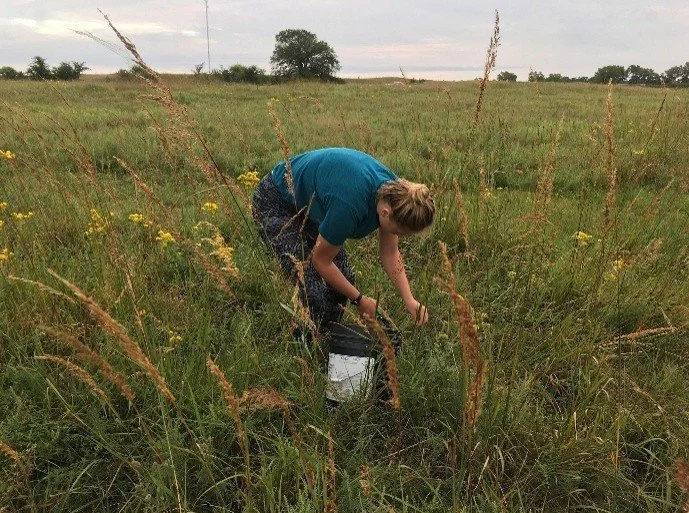
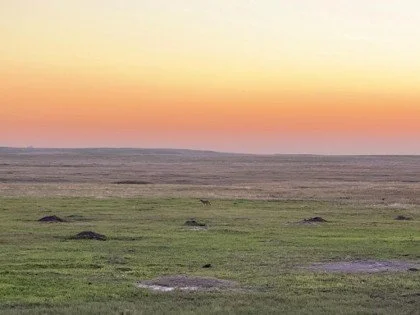
I could of course ask you to donate directly to our organization, Prairie Wildlife Research, but honestly one of the most important things you can do is just to give a dang! Tell your friends about your new BFF the ferret. Become an advocate of prairie dogs. Visit your local prairie and get into the weeds. Take a picture of the sun setting over the plains and understand that they’re just as worthy of protection as the mountains and the forests. The more you know about an ecosystem, the more you care about conserving all of its puzzle pieces, including the black-footed ferret. We already have the tools and the knowledge to keep black-footed ferrets bounding through their moonlit prairie world. The question is, do we care enough to support it? To share space with them? It’s really up to you and me to decide.
Written by
Nicole Mittman
Wildlife Field Technician and Amateur Artist
Prairie Wildlife Research, South Dakota